
Posted on — Leave a comment

Sleep Hygiene Checklist: 12 Habits for Deeper Sleep in 2026

Sleep Hygiene Checklist: 12 Habits for Deeper Sleep in 2026

You can do everything “right” — eight hours in bed, no late coffee, phone on the nightstand — and still wake up foggy. The reason is usually not one big mistake but a stack of small ones: a light leak here, an unstable wake time there, a room that’s two degrees too warm. Sleep quality is a system, and systems respond to checklists, not willpower.

This is a practical, evidence-based sleep hygiene checklist you can run tonight. Work top to bottom, fix what’s broken, and skip the gadgets. If you only change two things this week, change #1 (light) and #2 (wake time) — they carry most of the load.

What “Sleep Hygiene” Actually Means

Sleep hygiene is the set of controllable inputs that shape how easily you fall asleep and how deep that sleep gets: light, timing, temperature, sound, stimulants, and your pre-bed routine. It is not a personality trait and not a supplement. It’s a list of dials — and most people are leaving two or three of them in the wrong position.

Two facts explain why the checklist below is ordered the way it is:

  • Melatonin is light-sensitive. Light reaching the retina — even through closed eyelids — slows melatonin production and flattens sleep depth. This is why “darkness” sits at the top of the list.
  • Your circadian rhythm is trained by consistency, not intention. A stable wake time does more for sleep onset than any product on the market.

The 12-Point Sleep Hygiene Checklist

1. Make the room genuinely dark

Blackout curtains, and cover the small stuff: router LEDs, chargers, standby lights, clock faces. Total darkness protects melatonin from dusk until dawn.

2. Use a blackout sleep mask for everything the room can’t control

Curtains only work at home. A contoured blackout mask makes darkness portable — travel, naps, a partner reading beside you — and it’s the cheapest reliable upgrade in this list.

3. Anchor your wake time — seven days a week

Same alarm on weekends as on weekdays. This single habit stabilizes your melatonin curve, body temperature, and morning alertness.

4. Cool the room to 18–20°C (65–68°F)

Sleep onset depends on a natural drop in core body temperature. A warm room fights that drop. Cool, not cold.

5. Set a caffeine cut-off at 2pm

Caffeine has a long half-life and blocks adenosine — the “sleep pressure” molecule. An afternoon coffee can still be circulating at midnight.

6. Finish heavy meals 2–3 hours before bed

Late, large meals keep digestion and core temperature up, both of which delay sleep onset.

7. Dim the lights an hour before bed

Bright overhead light and screens in the final hour signal “daytime” to your brain. Switch to warm, low lamps.

8. Keep a fixed wind-down ritual (15–30 minutes)

The same short sequence every night — dim, tidy, stretch or read, then lights out — becomes a conditioned sleep cue. Repetition is the point.

9. Try 4-7-8 breathing to flip into “rest mode”

Inhale for 4 seconds, hold for 7, exhale for 8, for three rounds. Slow, long exhales nudge the nervous system out of alert mode.

10. Cut the noise — or mask it deliberately

Sudden sound fragments sleep. Earplugs or consistent white noise work; an inconsistent household does not.

11. Get out of bed if you’re awake more than ~20 minutes

Lying awake trains your brain to associate the bed with frustration. Move to dim light, do something calm, return when sleepy.

12. Get morning daylight within an hour of waking

Bright morning light is the strongest signal for setting your circadian clock — it makes tonight’s sleep come easier.

The 5-Minute Nightly Routine

If twelve points feel like a lot, here’s the compressed version most people can actually sustain:

  • Minute 0: Room already cool and dark; LED lights covered.
  • Minute 1: Lights dimmed to warm and low; screens down.
  • Minute 2: Put on your blackout mask (and earplugs if you have a noisy environment).
  • Minutes 3–5: Three rounds of 4-7-8 breathing, then lights out.

That’s it. The mask does the two hardest things automatically — blocks light and applies gentle pressure — so the ritual itself can stay short.

Where Most People Actually Fail: the Light Leak

Here’s the pattern that shows up again and again: someone fixes their schedule, cools the room, cuts caffeine — and still sleeps shallowly. The missing dial is light. A sliver of streetlight through the blinds, a charging LED, a bright phone screen at 1am. Because melatonin production is so light-sensitive, these small leaks can quietly erase the depth you worked for.

A properly designed sleep mask is the fix, because it travels with you and seals completely rather than relying on the room. Combined with gentle pressure across the eyes and brow — the same deep-pressure principle behind weighted blankets — it sends two calming “night” signals at once and makes it easier to drop out of alert mode.

The NOCHE Weighted Sleep Mask is built around exactly that combination: gravity-weighted memory foam for even pressure, a full-coverage contoured seal for 100% light blocking, and integrated earplugs for the second-biggest sleep disruptor — sound. It’s breathable and side-sleeper-friendly.

Shop the NOCHE Weighted Sleep Mask — $65.99 →

Want to see the full sleep kit — masks, pillows, and bundles? Browse the NOCHE shop →

FAQ

How long does it take to see results from better sleep hygiene?
Some points help the first night — darkness, temperature, and a wind-down routine. Rhythm-based habits (wake time, morning light, caffeine timing) usually take one to two weeks of consistency.

Is a sleep mask really necessary if I have blackout curtains?
Curtains handle your bedroom. A mask handles everything else — travel, hotels, naps, a partner’s schedule — and adds light pressure that curtains can’t. It’s the one piece of this checklist that works everywhere.

What’s the single highest-impact change?
If you change one thing, fix the light (darkness + a blackout mask). If you change two, add a stable wake time. Together they address the two most reliable levers: melatonin and circadian rhythm.

Do supplements belong on a sleep checklist?
They’re optional at best. Magnesium and similar products can help some people wind down, but they can’t block light or stabilize a rhythm. Treat them as a top layer, never the foundation.

The Bottom Line

Deeper sleep isn’t about doing more — it’s about removing what quietly steals depth. Run the checklist, keep the room cool and dark, hold your wake time steady, and close the light leaks with a mask that makes darkness automatic. Do those consistently and the difference shows up in the morning, not in a dashboard.
Posted on — Leave a comment

Sleep Tourism: The 5B Travel Trend, and the Sleep Kit That Makes It Work

Sleep Tourism: The $75B Travel Trend, and the Sleep Kit That Makes It Work

Sleep tourism is one of the biggest travel stories of 2026. Wellness resorts are building “sleep suites,” hotels are selling blackout packages, and the global sleep tourism market is estimated at $75 billion. Travelers are no longer booking rooms for location alone — they’re booking them for rest.

But here’s the gap nobody in the trend talks about: you don’t need a $1,500-a-night sleep resort to sleep well on the road. You need a sleep kit that makes any hotel room as dark and calm as your bedroom at home. This guide covers what sleep tourism actually is, why hotel rooms are the problem, and the small kit that fixes it.

What Sleep Tourism Is (and Why It’s Booming)

Sleep tourism is travel organized around sleep: resorts with blackout suites, circadian-rhythm itineraries, sleep coaches, and rooms engineered for total darkness and silence. The market has grown into a multi-billion-dollar industry as more people realize their normal vacations leave them more exhausted — because the hotel environment is terrible for sleep.

The insight behind the trend is correct: environment is the #1 controllable factor in sleep quality. The irony is that the fix is portable and cheap — most of what a $500-a-night “sleep suite” offers is darkness, quiet, and cool temperature. You can replicate 90% of it with a good kit.

Why Hotel Rooms Destroy Your Sleep

Familiar? You check into a great hotel, exhausted from travel — and then sleep worse than at home.

  • Light leaks everywhere. Hotel “blackout” curtains rarely meet in the middle. The hallway light, the digital alarm clock, the router LED, the streetlight through the gap — all of it suppresses melatonin, the hormone that deepens sleep.
  • Noise you can’t control. Hallways, elevators, air conditioning, neighbors, a city that never sleeps. Sound is the second-biggest sleep disruptor after light.
  • Unfamiliar signals. Your brain associates your bed with sleep. A new bed, new pillow, new room = alertness. Darkness and pressure cues help bridge that gap.
  • Jet lag compounds it. Your circadian rhythm is anchored to home time. Until it shifts, your body fights the local schedule.

The Travel Sleep Kit: What to Pack (and Skip)

You don’t need much. This is the kit frequent travelers and sleep-tourism regulars actually use:

1. A 100% Blackout Sleep Mask (The Core)

This is non-negotiable. Hotel curtains will leak; your eyelids will leak; nothing in a hotel room blocks light like a properly designed mask.

Look for a mask that:
– Seals completely at the nose bridge and temples — no light gaps;
– Is contoured so it doesn’t press on your eyelids or lashes;
– Stays put for 8+ hours, even if you’re a side sleeper;
– Covers your ears too, or comes with earplugs — one item, two problems solved.

2. Earplugs (or a Mask With Built-In Earplugs)

Hallway noise at 3am is the classic hotel-sleep killer. Foam earplugs work; integrated earplugs in a sleep mask are better because you can’t lose them in the night.

3. A Consistent Bedtime Signal

Set your phone to “sleep” mode, dim the lights an hour before bed, and use a short wind-down ritual (4-7-8 breathing: in 4 seconds, hold 7, out 8, three rounds). The ritual matters more than the hotel.

4. Morning Light (The Jet Lag Fix)

As soon as you wake, get bright light — open the curtains, go outside, have breakfast near a window. Bright morning light is the strongest signal for shifting your circadian rhythm to the local timezone. Night darkness + morning light = fastest jet lag recovery.

The “Sleep Suite” Test: What’s Actually Worth Paying For

Before you book a premium sleep resort, ask what you’re really paying for:

  • Total darkness at night → replicable with a $65.99 blackout mask
  • Quiet room → replicable with earplugs
  • Cool, breathable bedding → hard to replicate (this is the one thing worth paying for)
  • Sleep coaching and rituals → useful, but the fundamentals still apply

A night in a sleep suite can be a wonderful reset. But for the other 95% of your trips, a sleep kit delivers most of the benefit at 1/100th of the price.

The NOCHE Travel Sleep Kit

The NOCHE Weighted Sleep Mask is built for exactly this use case: gravity-weighted memory foam that applies calm, even pressure; a full-coverage contoured seal that blocks 100% of light; and integrated earplugs for noise — in one compact, breathable, side-sleeper-friendly product. It turns a leaking-curtained hotel room into a true dark, quiet sleep environment in seconds.

It’s backed by 188 verified buyer reviews averaging 4.98 out of 5 — the kind of product frequent travelers buy once and never leave home without.

Shop the NOCHE Weighted Sleep Mask — $65.99 →

Quick Travel Sleep Checklist

  • [ ] 100% blackout sleep mask (with earplugs if possible)
  • [ ] Phone on sleep mode, alarm clock covered
  • [ ] Room thermostat at 18–20°C (65–68°F) if you can control it
  • [ ] Bright light first thing in the morning
  • [ ] Same bedtime window every night of the trip

The Bottom Line

Sleep tourism is a $75 billion signal that rest is becoming a luxury people are willing to pay for. The smart traveler’s version of that trend is a $65.99 kit that works in any hotel, any timezone, any night — total darkness, gentle pressure, quiet ears.

Pack the mask. Sleep like home, anywhere.

NOCHE — The Art of Sleep.

Read next: Sleepmaxxing Guide: What Actually Works in 2026 · Sleep Mask for Deep Sleep: Total Darkness and Melatonin · Weighted Blanket for Deep Sleep: What Science Says

Posted on — 1 Comment

Sleepmaxxing Guide: What Actually Works in 2026

Sleepmaxxing Guide: What Actually Works in 2026

If you’ve scrolled TikTok or Instagram lately, you’ve seen it: people wearing mouth tape to bed, stacking magnesium supplements, dropping $400 on sleep-tracking rings, and calling it “sleepmaxxing.” The trend is everywhere — and it’s easy to feel like you’re failing at sleep because you’re not doing enough.

Here’s the thing most sleepmaxxing content won’t tell you: the viral extras are optional. The core of better sleep is four boring, cheap, science-backed habits — and one of them is the highest-ROI sleep purchase most people never make.

This guide separates what actually works from what’s just trending, so you can stop chasing gadgets and start sleeping deeper.

What Is Sleepmaxxing (and Why Is It Everywhere in 2026)?

Sleepmaxxing is the internet’s name for aggressively optimizing your sleep: every controllable input — light, temperature, sound, supplements, timing — treated like a dial you can turn to get more deep sleep. It started as a niche biohacking conversation and exploded on TikTok, where creators share their “sleep stacks”: blackout masks, mouth tape, magnesium glycinate, Oura rings, cooling sheets, and morning sunlight exposure.

The trend is real enough that mainstream outlets have covered it, and the science it’s built on is mostly sound — but the product recommendations that come with it are a mix of genuinely useful tools and expensive noise.

The good news: you don’t need the noise. The highest-impact variables are the oldest ones.

Why “8 Hours” Isn’t the Goal — Depth Is

Before you add anything to your routine, it helps to understand what good sleep actually is. Sleep isn’t one state. Across the night your brain cycles through light sleep (N1, N2), deep slow-wave sleep (N3), and REM — roughly every 90 minutes.

Deep sleep (N3) is where the magic happens:

  • Physical repair. Growth hormone peaks during deep sleep; tissues rebuild and muscles recover.
  • Immune function. Deep sleep supports the immune response; chronic shallow sleep is linked to more frequent illness.
  • Memory consolidation. What you learned during the day gets filed into long-term storage during deep sleep.
  • Energy restoration. This is the stage that actually makes you feel rested in the morning.

Now the part that matters for sleepmaxxing: melatonin — the hormone that initiates and deepens sleep — is extremely light-sensitive. When light reaches photosensitive cells in your retina, even through closed eyelids, the pineal gland slows melatonin production. Research estimates that light leaking through closed eyelids is a factor in nearly half of disrupted sleep cases. A router LED, a charger light, streetlight through the blinds — your brain registers all of it as “not fully night.”

That’s why you can sleep eight hours and still wake up wrecked: plenty of hours, very little depth.

The Sleepmaxxing Stack: What Actually Works

Based on the sleep science that has been consistent for decades (and that the trend, at its best, simply popularizes), here are the four interventions that reliably improve sleep quality:

1. Block 100% of Light (Non-Negotiable)

Total darkness protects melatonin production from dusk until dawn. At home this means blackout curtains and covering device LEDs. But perfect darkness is fragile — one light leak, one travel night, one partner reading beside you, and it’s gone.

A properly designed sleep mask makes darkness portable and reliable: 100% blackout seal, contoured so it doesn’t press on your eyelids, comfortable enough to wear all night. This is the single cheapest, most consistent sleep-quality upgrade available — and the one most sleepmaxxers still skip.

2. Add Gentle Deep Pressure

Deep pressure stimulation is the same science behind weighted blankets: firm, even pressure across the body activates the parasympathetic nervous system, lowering cortisol and heart rate and signaling “safe, calm, night.” The trend rediscovered it; the physiology is decades old.

The clever version: a weighted sleep mask combines pressure with light-blocking, so one product sends your brain two “deep night” signals at once. A weighted blanket can’t block light — and it can overheat you by 3am. The eyes are the fastest sleep switch: darkness and pressure, applied directly where your nervous system pays attention.

3. Anchor Your Wake Time (Rhythm Beats Willpower)

Circadian rhythm is trained by consistency more than by any gadget. Wake up at the same time every day — including weekends — and your melatonin curve, body temperature, and alertness all fall into line. This one habit does more than most supplement stacks, and it costs nothing.

4. Cool the Room and Build a Wind-Down

A cool room (18–20°C / 65–68°F) supports the natural drop in core body temperature that triggers sleep onset. Pair it with a short, repeatable wind-down: dim lights an hour before bed, a 4-7-8 breathing pattern (in for 4 seconds, hold for 7, out for 8, three rounds), and the same bedtime window every night.

Where the Trend Overhypes

Sleepmaxxing content isn’t wrong — it’s just noisy. Three of the most viral “hacks” deserve a reality check:

Mouth tape. The viral fix of 2025-2026. For many people it can irritate skin and lips, and it does nothing about the single biggest controllable sleep killer — light leaks. If you want one trend-approved upgrade, a blackout mask does more, more comfortably.

Magnesium supplements. Magnesium glycinate is genuinely popular (hundreds of millions of views on TikTok), and some people find it helps them wind down. But a supplement can’t block light, can’t fix a broken rhythm, and its effect varies a lot person to person. Treat it as an optional layer — never the foundation.

Expensive sleep tech. Smart rings, sleep trackers, and AI pads are fun and can be motivating. But tracking sleep doesn’t change sleep. If data motivates you, great — just don’t confuse the dashboard with the intervention.

The Highest-ROI First Purchase: A Weighted Sleep Mask

If you’re new to sleepmaxxing and want to buy exactly one thing, buy the thing that hits two of the four fundamentals at once: total darkness plus deep pressure.

The NOCHE Weighted Sleep Mask is designed around exactly that combination — gravity-weighted memory foam that applies even, calming pressure, a full-coverage contoured seal that blocks 100% of light, and integrated earplugs for the second-biggest sleep disruptor: sound. It’s breathable, side-sleeper-friendly, and backed by 188 verified buyer reviews averaging 4.98 out of 5.

Put it on 15–20 minutes before bed and your brain receives two unmistakable “deep night” signals simultaneously: darkness to keep melatonin flowing, and pressure to drop your nervous system out of alert mode.

Shop the NOCHE Weighted Sleep Mask — $65.99 →

A Realistic 7-Day Sleepmaxxing Protocol

You don’t need to overhaul your life. Do this, in order:

  • Days 1–2: Fix the light. Blackout curtains, cover device LEDs, and wear a 100% blackout mask every night. This alone usually improves perceived sleep depth within nights.
  • Days 3–4: Anchor the wake time. Same alarm, seven days a week. Add the mask + 4-7-8 breathing as your wind-down cue.
  • Days 5–6: Cool the room to 18–20°C and move screens out of the last hour before bed.
  • Day 7+: Evaluate. If you want more, add a consistent bedtime and experiment with one optional layer (magnesium, white noise, earlier dinner). Track how you feel in the morning — not the dashboard.

FAQ

Is sleepmaxxing real, or just a TikTok fad?
The term is new, but the underlying interventions — darkness, pressure, rhythm, temperature — are supported by decades of sleep research. The fad part is the gadget shopping; the fundamentals are real.

Does mouth tape work for sleep?
Some people find nasal breathing support helpful, but it’s not the highest-impact fix, and it can irritate skin. Start with a blackout mask; add tape only if you’re curious and your skin tolerates it.

Do I need a weighted mask if I already have blackout curtains?
Curtains help, but they only work at home. A mask makes darkness portable — hotels, flights, naps, partner schedules — and adds the deep-pressure benefit curtains can’t.

What’s the best first sleepmaxxing purchase?
A high-quality weighted sleep mask: it addresses the two most reliable levers (light block + pressure) in one product, for less than most sleep gadgets.

The Bottom Line

Sleepmaxxing, stripped of the hype, is just this: protect your melatonin with total darkness, calm your nervous system with gentle pressure, anchor your rhythm, and keep the room cool. Do those four things consistently and you’ll get more deep sleep — no $400 gadgets required.

And if you want the single highest-ROI upgrade tonight, start with the one product that does two of the four at once.

NOCHE — The Art of Sleep.

Read next: Weighted Blanket for Deep Sleep: What Science Says · Sleep Mask for Deep Sleep: Total Darkness and Melatonin · Silk Pillowcase Benefits: Why Real Mulberry Silk Wins

Posted on — Leave a comment

Silk Pillowcase Benefits: Why Real Mulberry Silk Beats Cotton for Skin, Hair and Sleep

Your Pillowcase Touches Your Face for 8 Hours — What’s It Made Of?

You spend a third of your life with your face pressed against a pillowcase. That fabric rubs against your skin, drags through your hair, absorbs your night creams, and traps heat while you sleep. Cotton — the default — is absorbent and rough at the fiber level. Silk is the opposite: smooth, breathable, and friction-free. The difference shows up in the morning.

Here’s what real silk pillowcases actually do, how to tell genuine mulberry silk from a cheap “silky” impostor, and how to pick the right momme weight for your needs.

What Is Mulberry Silk, and What Does “Momme” Mean?

Mulberry silk is the highest grade of silk, produced by silkworms fed exclusively on mulberry leaves. The result is a longer, finer, more uniform fiber than wild silk — which is exactly why luxury bedding brands specify “mulberry” on the label.

Momme (mm) is the weight unit for silk fabric: 1 momme ≈ 4.34 g/m². Higher momme = denser, more durable, more opaque silk. For pillowcases, 19–25 momme is the sweet spot. Below 16 momme feels thin and wears out quickly; above 25 momme gets heavy and overkill for a pillowcase.

Skin Benefits: Less Friction, More Moisture

Cotton fibers are short, twisted, and slightly rough — on a microscopic level they drag across your skin all night. Silk fibers are long and smooth, so they glide. That one difference drives most of the beauty benefits:

  • Fewer sleep creases. Morning “sheet lines” are literally creases pressed into your skin by rough fabric. Silk doesn’t hold creases the same way — and there’s no pulling on delicate facial skin.
  • Better moisture retention. Cotton is absorbent: it soaks up your night cream, your serums, and your skin’s natural moisture. Silk is less absorbent, so your skincare stays on your face where it belongs.
  • Gentler for sensitive and acne-prone skin. Silk is naturally hypoallergenic and resistant to dust mites, mold, and mildew — a genuine plus if you struggle with breakouts or allergies.

If you’re spending money on serums and moisturizers, sleeping on a pure mulberry silk pillowcase is the cheapest way to stop undoing that investment every night.

Hair Benefits: No More Frizz and Breakage

Cotton pillowcases create friction that roughens the hair cuticle, causes frizz, and breaks strands — especially if you toss and turn. Silk’s smooth surface lets hair slide instead of snagging, which means:

  • Less morning frizz and fewer tangles
  • Fewer split ends and less breakage over time
  • Overnight styles (braids, buns, curls) actually hold instead of turning into a nest

This is why silk bonnets and silk pillowcases are staples in curly-hair routines. The same smoothness that protects hair also protects your face — two benefits from one swap.

Sleep and Temperature Benefits

Silk is naturally temperature-regulating. It breathes in summer and retains warmth in winter, and it wicks moisture instead of trapping it. Hot sleepers and night-sweaters notice the difference immediately: less clamminess, fewer wake-ups from overheating. Cooler, drier skin also means fewer mid-night itch-scratch cycles.

Silk vs Satin vs Cotton: The Honest Comparison

  • Silk — natural, breathable, hypoallergenic, gentle on hair and skin. The real deal, and priced accordingly.
  • Satin — a weave, not a fiber. “Satin” pillowcases are usually polyester, which looks shiny but traps heat and doesn’t breathe. It’s a budget imitation of the silk feel, not the silk benefits. If you’re buying on a budget, a satin pillowcase is a fine first step — just know it’s not silk.
  • Cotton — absorbent, rough at the fiber level, and prone to creasing. Durable and cheap, but the worst of the three for skin and hair.

How to Choose a Real Silk Pillowcase

Four checks before you buy:

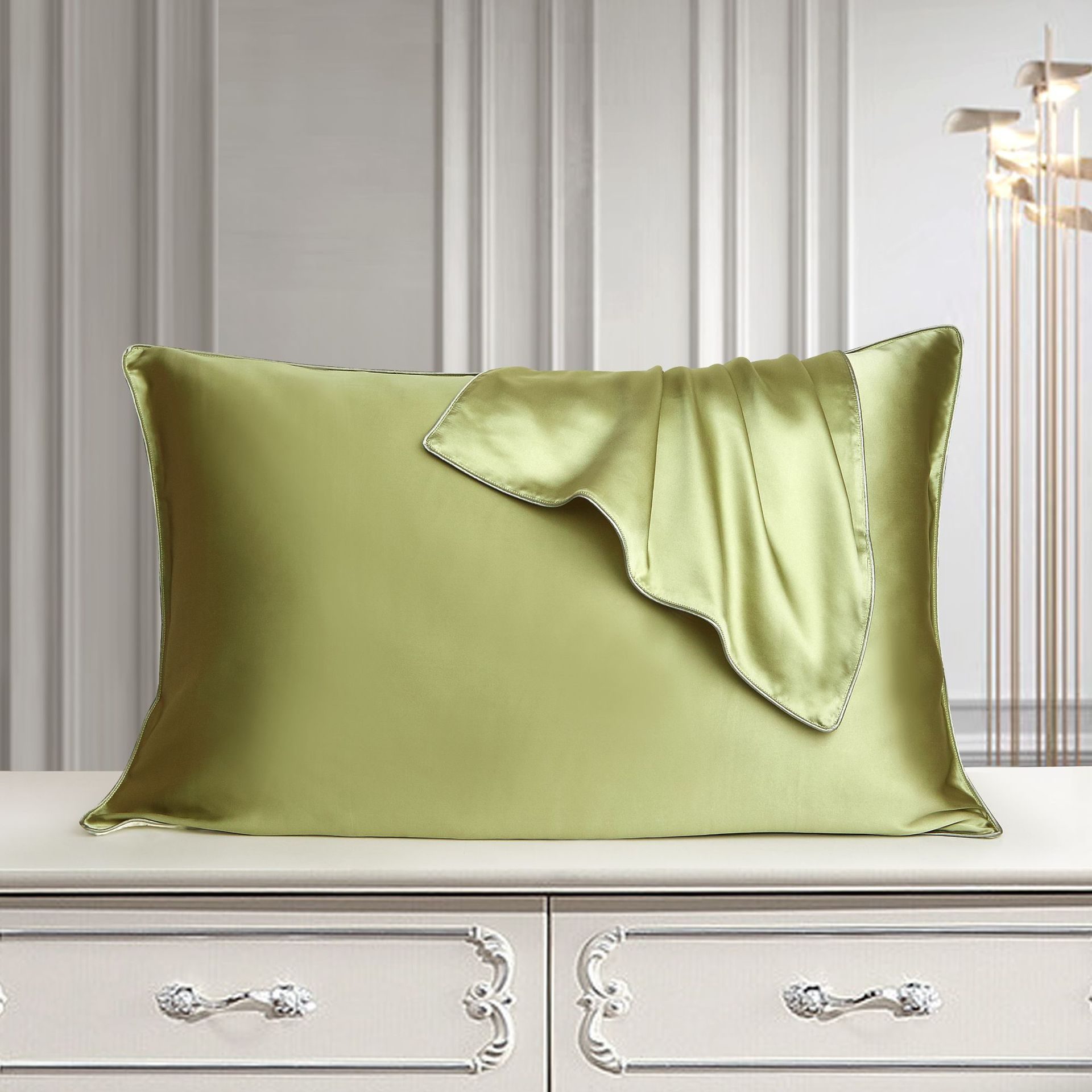
  • Check the momme. Aim for 19–25 mm. Below 16 mm is too thin. A 22-momme OEKO-certified silk pillowcase is the density most luxury hotels use.
  • Look for mulberry silk (100%). “Silk blend” or “silk-like” is not silk. The label should say 100% mulberry silk.
  • Check certifications. OEKO-TEX or similar certifications mean the dyeing and processing are free of harmful chemicals — important since the fabric sits against your face all night.
  • Check the construction. Double-sided silk (silk on both sides) is better than silk-on-cotton hybrids, and a hidden zipper or envelope closure keeps the pillow inside.

A double-sided 19-momme silk zipper pillowcase hits the balance of durability and price for most people; go up to 22 momme if you want that dense, cool, hotel-grade feel.

Caring for Silk So It Lasts

Silk is delicate but not fragile. Hand-wash in cool water with a gentle detergent (or machine-wash on delicate inside a mesh bag), skip the dryer, and air-dry away from direct sunlight. Avoid bleach and fabric softener. With proper care, a good silk pillowcase lasts years — which makes it more economical than replacing cotton every few months.

FAQ

Is a silk pillowcase worth it?

If you care about your skin, hair, or sleep temperature, yes — the friction and moisture benefits are measurable, and a quality case lasts for years with proper care.

What momme is best for a pillowcase?

19 momme is a solid everyday choice; 22–25 momme is denser, more durable, and feels more luxurious. Avoid anything below 16 momme.

Silk vs satin — what’s the difference?

Silk is a natural fiber; satin is a weave (often polyester). Satin looks silky but doesn’t breathe or regulate temperature like real silk, and it can trap heat.

How often should I wash a silk pillowcase?

Weekly is ideal — same as cotton. Wash on delicate in a mesh bag and air-dry to preserve the fibers.

Does silk help with acne?

Silk is naturally hypoallergenic and less absorbent than cotton, so it’s gentler on acne-prone skin and won’t soak up your skincare products. It won’t cure acne, but it removes one source of irritation.

Upgrade Your Night, One Swap at a Time

Swapping your pillowcase is a five-minute change with benefits you’ll see every morning — smoother skin, calmer hair, cooler sleep. Pair it with a 16-momme mulberry silk eye mask and you’ve built a complete silk sleep ritual.

Explore the silk pillowcase collection at NOCHE — every case ships with our 30-day guarantee, so you can feel the difference risk-free.

Posted on — Leave a comment

How to Choose a Sleep Mask in 2026: The Complete Buyer’s Guide

Your Bedroom Is Too Bright — and Your Brain Knows It

Light is the single biggest environmental thief of deep sleep. Even small amounts — a router LED, streetlight leaking through the blinds, the charging light on your phone — suppress melatonin and keep you in lighter stages of sleep. A good sleep mask is the cheapest, most effective blackout curtain you’ll ever own.

But not all masks are equal. Pick the wrong one and you’ll wake up with it on the floor (or with sore eyes). Pick the right one and it becomes the cue your brain associates with “it’s time to sleep.” This guide walks through everything that matters — types, materials, fit, features — so you can choose a mask that actually stays on and actually works.

Why You Need a Sleep Mask (Backed by the Research)

Melatonin isn’t just a sleep hormone — it’s a light sensor for your whole body. When light hits your closed eyelids, your brain reduces melatonin production, delays sleep onset, and shortens REM. In studies, people who slept in complete darkness fell asleep faster and reported deeper, more restorative sleep than those exposed to low-level light.

A quality mask blocks 100% of light. That’s something blackout curtains can’t always guarantee (especially if you travel), and it’s why frequent flyers, shift workers, and new parents all reach for one. If you’ve ever woken up groggy after a “full” night, light pollution could be the reason.

Types of Sleep Masks: Which One Is Right for You?

Sleep masks have evolved far beyond the flat airline eye cover. Here’s the landscape in 2026:

Flat masks

The classic design — a flat piece of fabric with an elastic strap. Cheap and packable, but they press directly on your eyelids, which causes two problems: micro-waking from eyelid pressure and “fluttering” (your eyes trying to open under the fabric). Fine for a nap, not ideal for a full night.

3D contoured masks

These have molded “eye cups” that create space so nothing touches your eyelashes or eyelids. The result: you can blink freely, your eyes stay naturally moist, and the mask stays comfortable for 8+ hours. 3D contoured sleep masks are the best starting point for anyone who’s never worn a mask before, because they solve the two biggest complaints — pressure and sweatiness.

Weighted and gravity masks

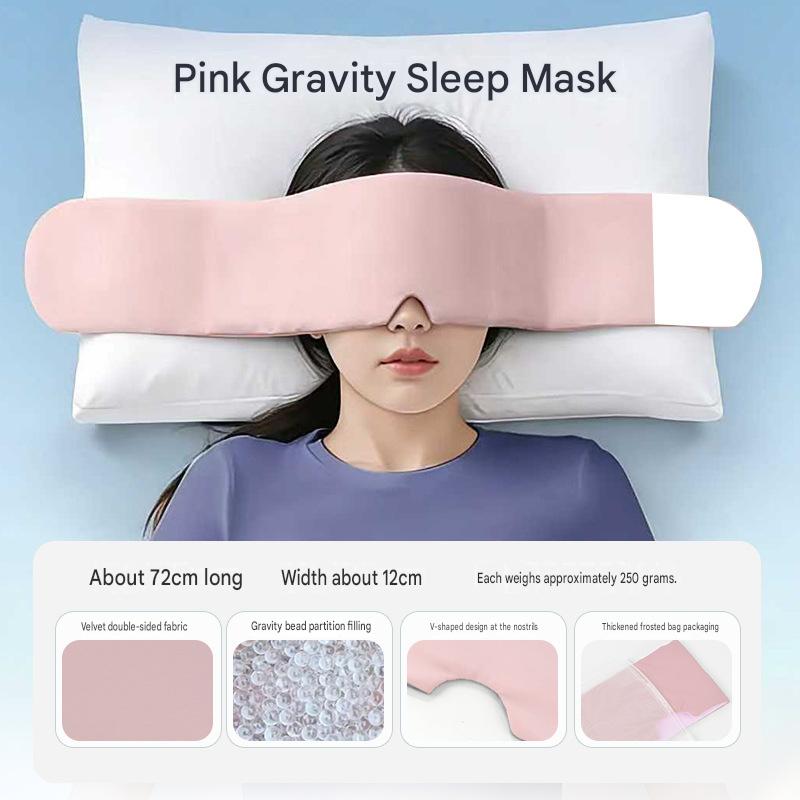
Inspired by weighted blankets, these use gentle distributed pressure across the face to trigger a calming response. The deep, even weight feels like a soft hand settling over your eyes, which helps anxious minds switch off. If you like the feeling of a heavy duvet, gravity eye masks are worth serious consideration — many users report falling asleep noticeably faster the first night.

Cooling gel masks

Gel inserts absorb and spread heat, keeping the eye area cool. Great for hot sleepers, night sweats, and anyone with puffy eyes or sinus pressure. A cooling gel sleep mask can double as a gentle eye-care tool — cool it in the fridge before bed for extra relief.

Silk masks

For sensitive skin and anyone prone to eye-area irritation, silk is the gentlest option. It’s naturally breathable, hypoallergenic, and doesn’t crease the skin the way cotton can. Silk masks are also the most luxurious-feeling — worth it if your sleep mask is part of a nightly ritual.

Bluetooth and sound masks

The newest category: a mask with flat speakers and built-in white noise or sleep sounds. You don’t need earbuds (no ear canal pressure), and the audio stops when you fall asleep. A Bluetooth white-noise sleep mask is a genuine 2-in-1 for people who already sleep with a sound machine — it replaces both devices with one.

How to Choose a Sleep Mask by Sleep Position

Your sleeping position matters more than you’d think:

  • Back sleepers — almost any mask works. Prioritize comfort and light blocking; weighted masks are especially relaxing on the back.
  • Side sleepers — the mask strap and edge can dig into your ear or cheek. Look for a contoured mask with a soft, adjustable strap and minimal edge pressure. A weighted sleep mask with earplugs is a clever side-sleeper pick because the earplugs double as pillow pressure relief.
  • Stomach sleepers — keep it flat and thin, and check that the strap doesn’t slip off when your face is turned into the pillow.

If you’re prone to waking up with the mask off, the culprit is usually pressure on the eyes. Look for a mask that blocks light without pressing on the eyes — the eye-cup design keeps contact off the lids entirely, so your body has no reason to fight it.

Materials Explained: Cotton, Memory Foam, Gel, Silk

  • Cotton — soft and breathable, but absorbs moisture and can drag on skin. Fine for occasional use.
  • Memory foam — molds to your face for a custom fit and excellent light blocking. Heavier and warmer; ideal for cooler months.
  • Gel — cooling, self-adjusting, and great for hot sleepers. Slightly heavier.
  • Silk — the premium option: naturally cool, hypoallergenic, kind to skin and hair, and surprisingly durable if cared for properly.

Features Actually Worth Paying For

  • Adjustable strap — a wide, soft strap with velcro or a buckle beats a fixed elastic band every time.
  • Removable/washable cover — your face touches this every night; you need to wash it.
  • Nose contour — a shaped nose bridge blocks the light gap that flat masks leak through.
  • Built-in sound — only if you already use white noise; otherwise skip it.

Care Tips to Make Your Mask Last

Hand-wash in cold water with mild detergent (or machine-wash on delicate in a laundry bag), air-dry away from direct sun, and replace when the elastic loses tension or the fabric pills. A well-cared-for mask lasts 1–2 years of nightly use.

FAQ

Is it bad to sleep with a sleep mask every night?

No — for most people it’s beneficial. Just choose a contoured or zero-pressure design so your eyelids aren’t compressed, and keep the mask clean.

What’s the difference between a 3D and flat sleep mask?

A 3D mask has molded eye cups that keep fabric away from your eyelids, allowing you to blink and eliminating eyelid pressure. Flat masks sit directly on the eyes.

Do weighted sleep masks work?

Many users report falling asleep faster thanks to the calming deep-pressure effect. It’s not magic, but the sensory feedback genuinely helps reduce pre-sleep anxiety.

Can I use a sleep mask with headphones?

Yes — or skip the earbuds entirely with a Bluetooth mask that has flat speakers built into the fabric.

What sleep mask is best for side sleepers?

Choose a contoured or weighted mask with a soft adjustable strap and minimal edge pressure. Side sleepers also benefit from a mask with earplugs to cushion the ear.

Sleep Darker Tonight

A sleep mask is a small purchase with an outsized payoff: faster sleep onset, deeper REM, and a stronger bedtime ritual. Start with the design that matches your position and sensitivity — and give it at least three nights before judging it.

Browse the full sleep mask collection at NOCHE to find the one that fits your routine. Every mask ships with our 30-day guarantee, so you can test it risk-free.