Your Bedroom Is Too Bright — and Your Brain Knows It
Light is the single biggest environmental thief of deep sleep. Even small amounts — a router LED, streetlight leaking through the blinds, the charging light on your phone — suppress melatonin and keep you in lighter stages of sleep. A good sleep mask is the cheapest, most effective blackout curtain you’ll ever own.
But not all masks are equal. Pick the wrong one and you’ll wake up with it on the floor (or with sore eyes). Pick the right one and it becomes the cue your brain associates with “it’s time to sleep.” This guide walks through everything that matters — types, materials, fit, features — so you can choose a mask that actually stays on and actually works.
Why You Need a Sleep Mask (Backed by the Research)
Melatonin isn’t just a sleep hormone — it’s a light sensor for your whole body. When light hits your closed eyelids, your brain reduces melatonin production, delays sleep onset, and shortens REM. In studies, people who slept in complete darkness fell asleep faster and reported deeper, more restorative sleep than those exposed to low-level light.
A quality mask blocks 100% of light. That’s something blackout curtains can’t always guarantee (especially if you travel), and it’s why frequent flyers, shift workers, and new parents all reach for one. If you’ve ever woken up groggy after a “full” night, light pollution could be the reason.
Types of Sleep Masks: Which One Is Right for You?
Sleep masks have evolved far beyond the flat airline eye cover. Here’s the landscape in 2026:
Flat masks
The classic design — a flat piece of fabric with an elastic strap. Cheap and packable, but they press directly on your eyelids, which causes two problems: micro-waking from eyelid pressure and “fluttering” (your eyes trying to open under the fabric). Fine for a nap, not ideal for a full night.
3D contoured masks
These have molded “eye cups” that create space so nothing touches your eyelashes or eyelids. The result: you can blink freely, your eyes stay naturally moist, and the mask stays comfortable for 8+ hours. 3D contoured sleep masks are the best starting point for anyone who’s never worn a mask before, because they solve the two biggest complaints — pressure and sweatiness.
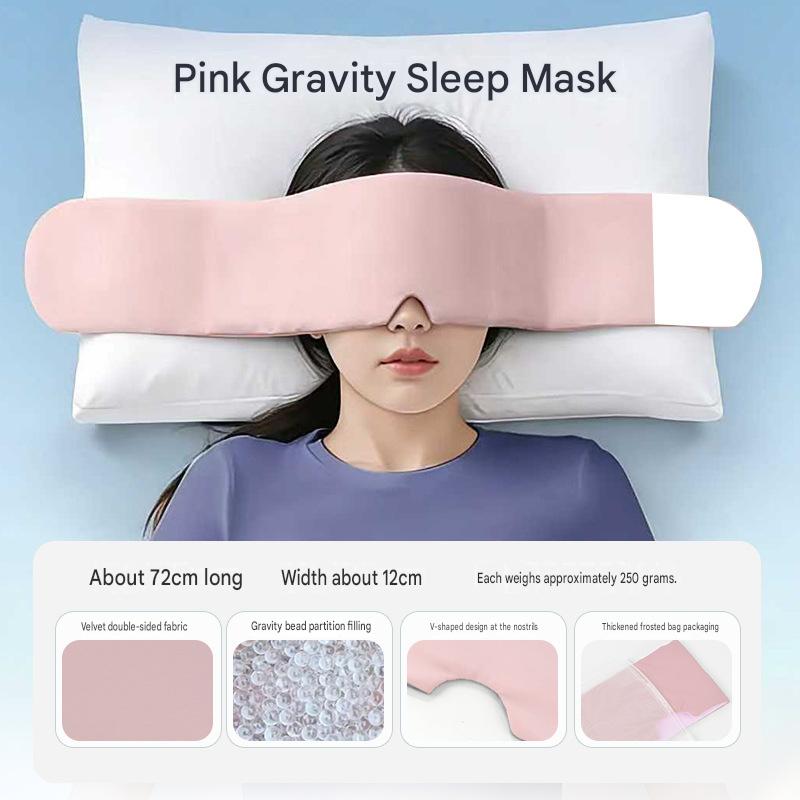
Weighted and gravity masks
Inspired by weighted blankets, these use gentle distributed pressure across the face to trigger a calming response. The deep, even weight feels like a soft hand settling over your eyes, which helps anxious minds switch off. If you like the feeling of a heavy duvet, gravity eye masks are worth serious consideration — many users report falling asleep noticeably faster the first night.
Cooling gel masks
Gel inserts absorb and spread heat, keeping the eye area cool. Great for hot sleepers, night sweats, and anyone with puffy eyes or sinus pressure. A cooling gel sleep mask can double as a gentle eye-care tool — cool it in the fridge before bed for extra relief.
Silk masks
For sensitive skin and anyone prone to eye-area irritation, silk is the gentlest option. It’s naturally breathable, hypoallergenic, and doesn’t crease the skin the way cotton can. Silk masks are also the most luxurious-feeling — worth it if your sleep mask is part of a nightly ritual.
Bluetooth and sound masks
The newest category: a mask with flat speakers and built-in white noise or sleep sounds. You don’t need earbuds (no ear canal pressure), and the audio stops when you fall asleep. A Bluetooth white-noise sleep mask is a genuine 2-in-1 for people who already sleep with a sound machine — it replaces both devices with one.
How to Choose a Sleep Mask by Sleep Position
Your sleeping position matters more than you’d think:
- Back sleepers — almost any mask works. Prioritize comfort and light blocking; weighted masks are especially relaxing on the back.
- Side sleepers — the mask strap and edge can dig into your ear or cheek. Look for a contoured mask with a soft, adjustable strap and minimal edge pressure. A weighted sleep mask with earplugs is a clever side-sleeper pick because the earplugs double as pillow pressure relief.
- Stomach sleepers — keep it flat and thin, and check that the strap doesn’t slip off when your face is turned into the pillow.
If you’re prone to waking up with the mask off, the culprit is usually pressure on the eyes. Look for a mask that blocks light without pressing on the eyes — the eye-cup design keeps contact off the lids entirely, so your body has no reason to fight it.
Materials Explained: Cotton, Memory Foam, Gel, Silk
- Cotton — soft and breathable, but absorbs moisture and can drag on skin. Fine for occasional use.
- Memory foam — molds to your face for a custom fit and excellent light blocking. Heavier and warmer; ideal for cooler months.
- Gel — cooling, self-adjusting, and great for hot sleepers. Slightly heavier.
- Silk — the premium option: naturally cool, hypoallergenic, kind to skin and hair, and surprisingly durable if cared for properly.
Features Actually Worth Paying For
- Adjustable strap — a wide, soft strap with velcro or a buckle beats a fixed elastic band every time.
- Removable/washable cover — your face touches this every night; you need to wash it.
- Nose contour — a shaped nose bridge blocks the light gap that flat masks leak through.
- Built-in sound — only if you already use white noise; otherwise skip it.
Care Tips to Make Your Mask Last
Hand-wash in cold water with mild detergent (or machine-wash on delicate in a laundry bag), air-dry away from direct sun, and replace when the elastic loses tension or the fabric pills. A well-cared-for mask lasts 1–2 years of nightly use.
FAQ
Is it bad to sleep with a sleep mask every night?
No — for most people it’s beneficial. Just choose a contoured or zero-pressure design so your eyelids aren’t compressed, and keep the mask clean.
What’s the difference between a 3D and flat sleep mask?
A 3D mask has molded eye cups that keep fabric away from your eyelids, allowing you to blink and eliminating eyelid pressure. Flat masks sit directly on the eyes.
Do weighted sleep masks work?
Many users report falling asleep faster thanks to the calming deep-pressure effect. It’s not magic, but the sensory feedback genuinely helps reduce pre-sleep anxiety.
Can I use a sleep mask with headphones?
Yes — or skip the earbuds entirely with a Bluetooth mask that has flat speakers built into the fabric.
What sleep mask is best for side sleepers?
Choose a contoured or weighted mask with a soft adjustable strap and minimal edge pressure. Side sleepers also benefit from a mask with earplugs to cushion the ear.
Sleep Darker Tonight
A sleep mask is a small purchase with an outsized payoff: faster sleep onset, deeper REM, and a stronger bedtime ritual. Start with the design that matches your position and sensitivity — and give it at least three nights before judging it.
Browse the full sleep mask collection at NOCHE to find the one that fits your routine. Every mask ships with our 30-day guarantee, so you can test it risk-free.